Why Combustion Airflow Needs Adjustment
If you have ever owned a traditional wood stove, you probably know the routine.
You light the fire, wait for it to catch, adjust the primary air, wait some more, and check it again. Then the stove starts burning hotter than expected, so you reduce the air. An hour later, the fire may be smoldering, the room is cooling down, and the glass is beginning to turn black.
We call it the “Wood Stove Dance.”
Traditional wood stoves can require repeated adjustments as the fire, chimney temperature, outdoor conditions, and chimney draft change. Leave the air open too long and the stove may burn through the wood faster than intended. Reduce it too soon and the fire may struggle.
At Flame Innovation, we believed there had to be a better way.
We did not want to build a wood stove that depended on electronic sensors, control boards, motors, or household electricity. We wanted a system that could respond automatically while preserving the dependable simplicity of a traditional wood stove.
That is why we developed Just Right Burn Technology.
What Is Just Right Burn Technology?
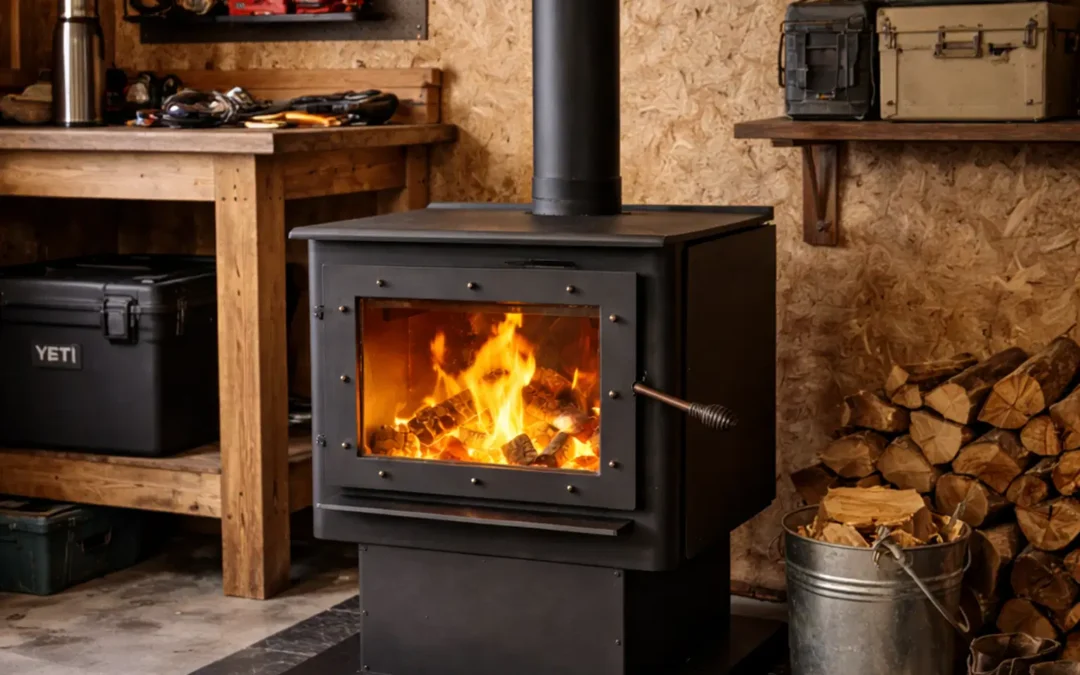
Just Right Burn Technology is the automatic mechanical airflow-control system built into the Chinook Wood Stove.
Powered by our patented Variable Choked Venturi, or VCV, system, it uses chimney draft pressure to help regulate the combustion air entering the stove.
There are no electronic sensors measuring the fire. There is no computer making decisions. There are no electric motors moving powered dampers.
Instead, Just Right Burn Technology responds mechanically to the natural changes in chimney draft that occur throughout the burn.
As draft conditions change, the system helps adjust combustion airflow so the Chinook can maintain a steadier, more controlled fire during low and medium burns.
You still choose the desired heat setting. Just Right Burn Technology helps the stove keep the burn within that selected range.
Why Chimney Draft Matters
Chimney draft is not constant.
Draft generally becomes stronger as the chimney heats, but it can also change with:
- Outdoor temperature
- Wind conditions
- Chimney height
- Chimney configuration
- Fire intensity
- Fuel load
- Stage of the burn
On a conventional manually controlled stove, the operator must compensate for those changes by adjusting the primary air control.
Just Right Burn Technology allows the Chinook to respond automatically to changing draft conditions without making the stove dependent on electricity or complicated electronics.
The Mechanical System Behind Just Right Burn Technology
Just Right Burn Technology is powered by two patented mechanical valves: the Primary VCV and the Secondary VCV.
Each valve manages a different part of the Chinook’s combustion system.
The Primary VCV
The Primary VCV helps regulate the combustion air supplied directly to the wood during low and medium burns.
When chimney draft becomes stronger, the valve helps limit primary airflow so the fire does not become unnecessarily aggressive or consume the wood too quickly.
When draft conditions decrease, the valve allows additional primary air to help support combustion.
This mechanical response helps the Chinook adapt to changing chimney conditions without requiring the operator to repeatedly adjust the primary air control.
During a full high burn, the manual primary air control overrides the Primary VCV. This allows the greater airflow needed for maximum combustion and heat output.
The operator remains in control of the desired burn setting. The Primary VCV simply helps manage airflow during low and medium operation.
The Secondary VCV
The Secondary VCV automatically regulates the air supplied to the Chinook’s five stainless steel secondary burn tubes.
Secondary air enters above the fire and helps ignite smoke and combustible wood gases that might otherwise escape through the chimney.
As chimney draft changes, the Secondary VCV mechanically adjusts the secondary airflow to better match the stove’s combustion conditions.
Unlike the Primary VCV, the Secondary VCV continues operating automatically during low, medium, and full high-burn settings.
No electronic sensor, powered damper, or operator adjustment is required.
Less Waiting After a Low-Burn Reload
One of the greatest benefits of Just Right Burn Technology is the ability to reduce the waiting that often follows a nighttime reload.
With many traditional wood stoves, you must reload the firebox, leave the primary air open, wait for the fire and chimney draft to strengthen, and then return to reduce the air.
Reduce it too early and the fire may weaken. Wait too long and the new fuel load may begin burning more aggressively than intended.
When reloading the Chinook during an established low burn, you can load the firebox, close the door, close the catalytic bypass, and immediately move the primary air control to its minimum stop.
The Primary VCV remains positioned to provide the airflow needed while chimney draft develops. Once sufficient draft pressure is generated—typically around -0.070 to -0.075 inches of water column—the valve automatically changes position and helps set the stove for its controlled low burn.
That means less time standing beside the stove waiting to make one more adjustment before going to bed.
Always operate the Chinook according to the current owner’s manual and established operating procedures.
Different Approaches to Wood-Stove Control
Manual Airflow Control
On a manually controlled stove, the operator adjusts combustion airflow as the fire develops and conditions change. Correct fuel, draft and operation influence the result.
Automatic Control Systems
Automatic control is available in different forms. Some stoves use mechanical thermostats that respond to temperature; others use electronic sensors and powered actuators. The Chinook’s particular approach is a mechanical VCV system that responds to chimney draft.
Just Right Burn Technology
The Chinook takes a different approach.
Just Right Burn Technology provides automatic, draft-responsive airflow management through mechanical engineering.
It does not require:
- Electricity
- Electronic sensors
- Control boards
- Electric motors
- Powered dampers
- Software
- Programming
- An internet connection
The result is a non-electronic automatic wood stove that helps manage its combustion airflow even during a power outage.
An optional convection fan is available to improve room-air circulation, but it does not control the stove or operate Just Right Burn Technology.
You Choose the Heat—The Stove Helps Manage the Burn
Just Right Burn Technology does not take control away from the operator.
You still use the manual primary air control to choose a low, medium, or high burn.
At low and medium settings, the Primary VCV helps regulate primary combustion air as chimney draft changes. The Secondary VCV independently manages the airflow supplied to the secondary burn tubes.
At full high burn, the manual primary air control overrides the Primary VCV to provide maximum primary airflow. The Secondary VCV continues responding automatically to chimney draft.
This gives you direct control over the heat setting while allowing the Chinook to mechanically respond to changing combustion conditions.
What Just Right Burn Technology Means for You
Just Right Burn Technology is designed to provide:
- Less waiting after an established low-burn reload
- Fewer repeated air-control adjustments
- More consistent low and medium burns
- Automatic response to changing chimney draft
- Better control over overly aggressive combustion
- Support for sustained combustion when draft decreases
- Automatic secondary-air management
- Full manual airflow during a high burn
- Dependable operation without electricity
- No electronic sensors, motors, or control boards
Proper installation, seasoned firewood, chimney maintenance, and correct stove operation will always matter.
Just Right Burn Technology adds another level of control by allowing the Chinook to mechanically respond as chimney draft changes throughout the burn.
Mechanical Intelligence. Dependable Wood Heat.
The Chinook combines the substantial firebox, strong heating performance, premium materials, and proven construction expected from a serious home and shop wood stove.
Just Right Burn Technology is what makes it different.
Powered by our patented VCV system, it helps regulate primary and secondary combustion airflow without electronics, reduces the need for repeated adjustments, and makes operating the stove more convenient—especially during low and medium burns.
Load the firebox. Choose your heat setting. Let Just Right Burn Technology help keep the burn just right.
Construction and Performance
The Chinook Wood Stove is built in Post Falls, Idaho, with a steel body, brick-lined firebox and a weight of approximately 480 pounds. Plan professional handling and a suitable supporting structure as part of the installation.
- Heating-area estimate: up to approximately 2,400 square feet under suitable conditions. Actual coverage depends on the building, climate, installation and fuel.
- Combustion system: catalytic combustion and five secondary burn tubes, supported by Just Right Burn Technology.
- Published EPA-certified emissions: 1.29 grams per hour.
- Published efficiency: 79.4% HHV.
- Firebox: 2.17 cubic feet, accepting logs up to 18 inches long.
Check the model’s certification through the EPA Certified Wood Heater Database and the documents on our manuals and reports page. Safety listing and mobile-home installation requirements are model-specific.
Non-Electric Operation Still Requires Proper Care
The Chinook can produce heat without household electricity. The optional convection fan circulates room air and is separate from the combustion controls. Chimney draft, fuel quality and maintenance still matter; mechanical valves cannot guarantee a clean chimney or prevent every operating error.
The air-wash system helps limit deposits on the viewing window during correct operation. Glass may still need cleaning according to the manual. Never treat automatic airflow assistance as a reason to skip inspections, maintenance or operating instructions.

Is the Chinook Right for Your Building?
The Chinook is intended for substantial home and shop heating. For a smaller heating requirement, compare the Caboose Tiny Wood Stove and Steelhead Small Wood Stove. Match the model to heat loss, available installation space and the proposed chimney.
Plan Your Chinook Installation
See the Chinook product page for current availability and specifications. For help assessing a home or shop installation, contact Flame Innovation with your building and chimney details.