
Chinook Wood Stove
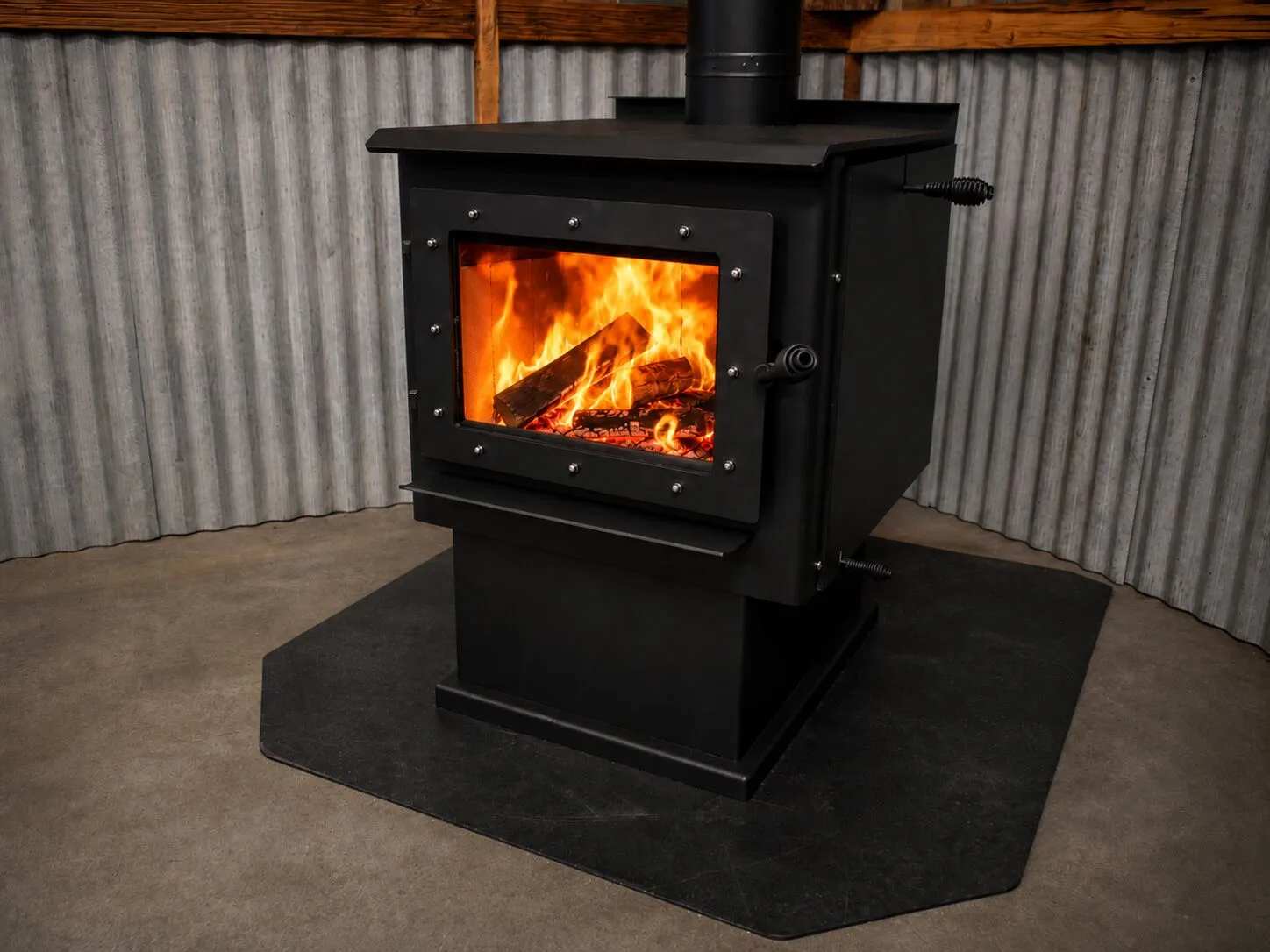
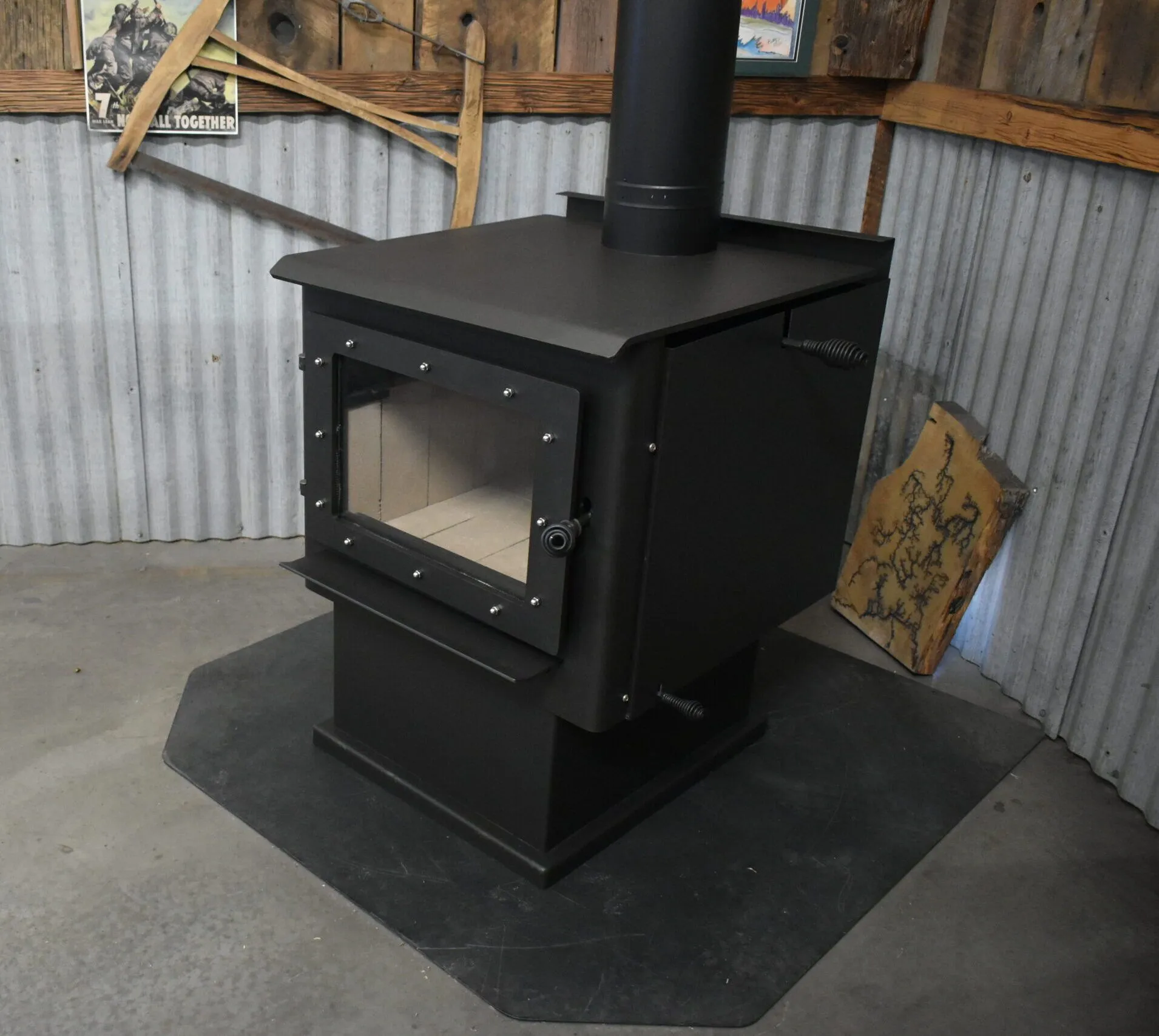
Chinook Wood Stove
- Available Now
$3,799.99
Chinook Wood Stove for Homes and Shops
https://www.youtube.com/watch?v=Gf8TkB8D97w
The Chinook Wood Stove is a premium, high-efficiency wood stove designed to provide dependable heat for homes, garages, workshops, and shops.
Built in Post Falls, Idaho, the Chinook combines American-made craftsmanship with a large brick-lined firebox, strong heating performance, catalytic and secondary combustion, and our exclusive Just Right Burn Technology.
With heating capacity for spaces up to approximately 2,400 square feet, an EPA-tested maximum heat output of 36,400 BTU per hour, and an estimated maximum output of up to 80,000 BTU per hour, the Chinook is built for serious home and shop heating.
What truly sets the Chinook apart is Just Right Burn Technology. Powered by our patented Variable Choked Venturi system, this non-electronic automatic airflow-control system responds mechanically to changing chimney draft and helps maintain a steadier, more controlled burn during low and medium operation.
The result is dependable wood heat with less waiting, less repeated adjustment, and no electronic sensors, motors, control boards, or electricity required to manage combustion.
A Serious Wood Stove for Homes and Shops
The Chinook is designed for permanent heating applications where reliability, output, efficiency, and long-term performance matter.
Unlike smaller stoves intended primarily for tents, sheds, tiny homes, or occasional recreational use, the Chinook has the firebox capacity, heating performance, and proven stove construction needed for larger residential and working spaces.
The Chinook is well suited for:
- Primary or supplemental home heating
- Garages
- Workshops
- Detached shops
- Rural properties
- Manufactured and mobile homes when properly installed
- Buildings that need dependable backup heat
- Areas where winter power outages are common
Its fully brick-lined, 2.17-cubic-foot firebox accommodates properly split firewood up to 18 inches long. This allows homeowners and shop owners to use standard-length cordwood without constantly cutting unusually short pieces.
Why the Chinook Is an Excellent Wood Stove for Home Heating
A home-heating wood stove must provide more than occasional warmth. It needs to produce steady heat, operate efficiently, withstand repeated use, and remain dependable throughout the heating season.
The Chinook is built with premium materials and proven stove construction for serious home and shop heating.
Its combination of strong output, a substantial firebox, high-efficiency combustion, and Just Right Burn Technology gives homeowners greater control over their heat without making the stove dependent on electricity or complicated electronics.
Heating Capacity for Larger Spaces
The Chinook can heat spaces up to approximately 2,400 square feet under suitable conditions.
Actual heating capacity will depend on several factors, including:
- Outdoor temperature
- Insulation
- Ceiling height
- Floor plan
- Air leakage
- Chimney configuration
- Firewood species
- Firewood moisture content
- Amount of wood loaded
- Selected burn setting
The Chinook’s broad heat-output range allows it to provide lower, sustained heat during milder conditions and significantly greater output when colder weather demands it.
Just Right Burn Technology
Just Right Burn Technology is our customer-facing name for the patented Variable Choked Venturi, or VCV, system built into the Chinook Wood Stove.
This system uses two mechanical, draft-responsive valves to help regulate the primary and secondary combustion air entering the stove.
Chimney draft does not remain constant throughout a fire. It changes as the chimney heats, the fuel load burns, outdoor temperatures shift, and weather conditions affect the chimney.
Traditional wood stoves rely heavily on the operator to compensate for these changes by repeatedly adjusting the primary air control.
Just Right Burn Technology gives the Chinook an additional level of automatic airflow management. As chimney draft changes, the mechanical VCV valves respond without relying on electricity, sensors, motors, software, or powered dampers.
This helps the stove avoid burning too aggressively or becoming starved for combustion air during low and medium burns.
The operator still chooses the desired heat setting. Just Right Burn Technology helps the stove maintain a more consistent burn within that selected setting.
Less Waiting After a Low-Burn Reload
One of the most useful benefits of Just Right Burn Technology is the ability to reduce the waiting and babysitting that can occur after reloading a conventional wood stove.
With many manually controlled stoves, the operator must leave the primary air open after reloading and wait for the chimney draft and fire to become strong enough before reducing the stove to its low-burn setting.
Closing the air too early may weaken the fire. Leaving it open too long may cause the wood to burn more aggressively than intended.
During an established low-burn reload, the Chinook allows the operator to load the firebox, close the door, close the catalytic bypass, and immediately move the primary air control to its minimum stop without waiting beside the stove for draft to fully develop.
The Primary VCV remains positioned to provide the airflow needed to support the fire while chimney draft builds.
Once sufficient draft pressure develops—typically around -0.070 to -0.075 inches of water column—the Primary VCV automatically changes position and helps set the stove for a controlled low burn.
This can reduce the amount of time spent waiting to make another air adjustment, which can be especially valuable during nighttime reloads.
Always operate the Chinook according to the current owner’s manual and established operating procedures.
Primary VCV Control During Low and Medium Burns
The Primary VCV operates during low-to-medium burn settings.
As chimney draft becomes stronger, the valve helps reduce primary airflow so the fire does not become unnecessarily aggressive or consume the wood too quickly.
As chimney draft decreases, the valve allows additional primary air to help sustain combustion.
This automatic mechanical response helps the Chinook adapt to changing chimney conditions without requiring the operator to continually compensate with repeated manual adjustments.
The operator remains in control of the desired heat setting through the manual primary air control. Just Right Burn Technology works within that selected setting to help provide a steadier, more manageable burn.
Full High-Burn Operation
During a full high burn, the manual primary air control overrides the Primary VCV.
This allows the greater primary airflow required for maximum combustion and heat output.
The Primary VCV helps regulate combustion during low and medium burns without restricting the stove when full high-burn performance is needed.
This gives the operator full access to the Chinook’s heating capability while preserving the benefits of automatic draft-responsive control at lower settings.
Automatic Secondary-Air Control
The Secondary VCV is controlled entirely by chimney draft pressure.
It automatically regulates the combustion air supplied to the Chinook’s five stainless steel secondary burn tubes.
As chimney draft changes, the Secondary VCV adjusts the amount of secondary air entering the upper portion of the firebox. This helps better match the secondary airflow to the stove’s changing combustion conditions.
The heated secondary air supports the ignition of smoke and combustible wood gases above the fire, helping recover additional heat that might otherwise escape through the chimney.
Unlike the Primary VCV, the Secondary VCV continues responding automatically to chimney draft during low, medium, and full high-burn operation.
No electronic sensors, motors, powered dampers, or operator adjustments are required to control the Secondary VCV.
How Just Right Burn Technology Works at Each Burn Setting
Low Burn
The operator selects the low-burn setting with the manual primary air control.
The Primary VCV helps regulate the primary combustion air supplied directly to the wood based on chimney draft conditions. At the same time, the Secondary VCV independently regulates the air supplied to the secondary combustion tubes.
This helps the Chinook maintain a controlled, sustained fire without requiring constant adjustment.
Medium Burn
During a medium burn, the Primary VCV continues helping manage primary airflow within the operator’s selected setting.
The Secondary VCV automatically adjusts secondary airflow as chimney draft changes.
Together, the two valves help the Chinook respond mechanically to changing combustion conditions while continuing to produce steady heat.
Full High Burn
During a full high burn, the manual primary air control overrides the Primary VCV to provide the increased airflow needed for maximum combustion and heat output.
The Secondary VCV continues operating automatically based on chimney draft pressure.
This design gives the operator control over the desired heat output while allowing the stove to automatically respond to changing chimney conditions.
A Non-Electronic Automatic Wood Stove
Some advanced wood stoves use electronic sensors, control boards, electric motors, and powered dampers to make combustion-air adjustments.
The Chinook accomplishes its airflow-management function mechanically.
Just Right Burn Technology does not require:
- Electricity
- Electronic sensors
- Control boards
- Electric motors
- Powered dampers
- Software
- Programming
- An internet connection
This allows the Chinook to provide automatic, draft-responsive airflow control while maintaining the dependable simplicity expected from a traditional wood stove.
The optional convection fan can improve room-air circulation, but it is not part of the combustion-control system. The Chinook and its Just Right Burn Technology can continue operating without the fan or household electricity.
Why Just Right Burn Technology Matters
Just Right Burn Technology helps provide:
- More consistent low and medium burns
- Automatic response to changing chimney draft
- Less waiting after an established low-burn reload
- Less repeated adjustment of the primary air control
- Better control over overly aggressive combustion
- Additional airflow when draft conditions decrease
- Automatic secondary-air management
- Full primary airflow during a high burn
- Dependable operation without electricity
- No electronic sensors, motors, or control boards
Just Right Burn Technology does not replace proper installation, seasoned firewood, chimney maintenance, or correct stove operation.
It adds an intelligent mechanical layer of airflow control that helps the Chinook maintain a steadier, more manageable, and more efficient burn.
Dependable Heat During Power Outages
The Chinook does not require electricity to operate its combustion system or Just Right Burn Technology.
This allows it to continue producing heat during power outages when furnaces, heat pumps, pellet stoves, and other electrically dependent heating systems may not function.
An optional 165 CFM double squirrel-cage fan is available to improve heated-air circulation throughout the room. However, the fan is not required for the stove to burn wood, produce heat, or operate its airflow-control system.
This makes the Chinook an excellent source of primary, supplemental, or emergency backup heat in areas where winter power outages are a concern.
Large Neo-Ceramic Viewing Window
The Chinook features a large neo-ceramic viewing window measuring approximately 16⅜ inches wide by 11¼ inches tall.
The large window provides a clear view of the fire while allowing radiant heat to enter the living space.
An integrated air-wash system directs airflow across the inside surface of the glass to help reduce soot accumulation and preserve a clearer fire view during proper operation.
The heavy-duty door, gasketed seal, neo-ceramic glass, and controlled combustion system provide a refined residential appearance without sacrificing durability or long-term performance.
Outside Combustion-Air Connection
A 4-inch outside-air connection allows combustion air to be supplied from outside the building.
Outside combustion air can be especially valuable in tightly sealed homes or buildings where exhaust fans, ventilation equipment, clothes dryers, and other appliances may affect indoor air pressure.
Supplying outside combustion air can help prevent the stove from competing with other appliances for air inside the building.
All outside-air installations must follow the current Chinook owner’s manual and applicable local requirements.
Built for Garages, Workshops, and Shops
Garages and shops can be more difficult to heat than residential rooms.
They often have:
- Higher ceilings
- Concrete floors
- Large overhead doors
- Open floor plans
- Greater air leakage
- Less insulation
- Frequent door openings
- Larger volumes of air to heat
The Chinook is built for these demanding heating environments.
Its strong output, substantial firebox, durable construction, and optional convection fan make it an excellent choice for garages, workshops, and detached shops where heat output and long-term reliability are equally important.
Premium Materials and Proven Stove Construction
At approximately 480 pounds, the Chinook is a substantial heating appliance constructed for repeated use.
Its construction includes:
- Heavy-gauge steel stove body
- Fully brick-lined firebox
- Five stainless steel secondary burn tubes
- Catalytic combustor
- Stainless steel catalyst protector
- High-temperature baffle board
- KAO wool insulation
- Heavy-duty gasketed door
- Large neo-ceramic viewing window
- Air-wash glass system
- Patented mechanical airflow controls
These materials and components are selected to support durability, heat retention, serviceability, and long-term performance.
The Chinook is built with premium materials and proven stove construction for serious home and shop heating.
Strong Heat Output
The Chinook has an EPA-tested maximum heat output of 36,400 BTU per hour.
Under higher real-world fuel-loading conditions, the stove has an estimated maximum output of up to approximately 80,000 BTU per hour.
Actual output will vary depending on:
- Wood species
- Wood density
- Log size
- Firewood moisture content
- Amount of wood loaded
- Chimney draft
- Burn setting
- Installation conditions
- Building heat loss
For direct comparisons with other certified wood stoves, the EPA-tested output of 36,400 BTU per hour should be used.
The estimated maximum output of up to approximately 80,000 BTU per hour represents the Chinook’s potential under higher real-world fuel loads and is not an EPA-certified rating.
Optional Heat-Circulation Fan
An optional 165 CFM double squirrel-cage fan can help distribute heated air throughout larger rooms and open working spaces.
The fan moves room air around the stove’s heated surfaces and returns warmed air to the surrounding space.
This can reduce the temperature difference between the area immediately surrounding the stove and more distant portions of the room.
The fan is optional and does not operate or control the stove’s combustion system, Primary VCV, Secondary VCV, or Just Right Burn Technology.
The Chinook can continue heating without the fan during a power outage.
Large Firebox for Practical Home and Shop Heating
The Chinook features a fully brick-lined, 2.17-cubic-foot firebox measuring approximately 16 inches wide by 21 inches deep.
It accommodates properly split logs up to 18 inches long, making it practical for homeowners and shop owners who use standard cordwood.
The refractory firebrick helps retain heat inside the firebox while protecting the steel stove body from direct exposure to the highest combustion temperatures.
The substantial firebox also provides greater flexibility in fuel loading and heat output.
The amount, size, density, species, and moisture content of the wood will all influence how much heat the stove produces and how long the fuel load burns.
High-Efficiency Catalytic and Secondary Combustion
The Chinook combines secondary and catalytic combustion to extract more usable heat from the wood while reducing particulate emissions.
Its combustion system includes:
- Five stainless steel secondary burn tubes
- Catalytic combustor
- Stainless steel catalyst protector
- High-temperature baffle board
- KAO wool insulation
- Fully brick-lined firebox
- Controlled primary combustion air
- Automatically regulated secondary combustion air
- Just Right Burn Technology
The secondary burn tubes introduce heated combustion air above the fire. This helps ignite smoke and combustible wood gases that might otherwise escape through the chimney.
The catalytic combustor supports additional combustion at lower exhaust temperatures, helping reduce particulate emissions while recovering more heat from the fuel.
Just Right Burn Technology helps regulate the airflow feeding these combustion systems as chimney draft changes.
EPA-Certified Performance
The Chinook provides strong heating performance while meeting modern emissions requirements.
Tested Performance
- EPA-tested maximum heat output: 36,400 BTU per hour
- Estimated maximum real-world output: Up to approximately 80,000 BTU per hour
- Heating capacity: Up to approximately 2,400 square feet
- EPA-certified particulate emissions: 1.29 grams per hour
- Overall efficiency: 79.4% HHV
- Overall efficiency: 84.9% LHV
- Firebox capacity: 2.17 cubic feet
- Maximum recommended log length: 18 inches
Actual performance depends on the installation, chimney, building, operating conditions, selected burn setting, and firewood being used.
What Sets the Chinook Apart From a Traditional Wood Stove?
The Chinook provides the size, construction, heating capacity, and durability customers expect from a serious home or shop wood stove.
What sets it apart is Just Right Burn Technology.
Traditional wood stoves rely largely on the operator to manually adjust combustion air as the fire, stove temperature, chimney temperature, outdoor conditions, and chimney draft change.
The Chinook’s patented VCV system responds mechanically to those changing draft conditions.
The Primary VCV helps regulate primary combustion air during low and medium burns. The manual primary air control overrides it during a full high burn.
The Secondary VCV automatically regulates the air supplied to the five stainless steel secondary burn tubes during low, medium, and high-burn operation.
Some advanced wood stoves perform similar airflow-management functions with electronic sensors, control boards, motors, and powered dampers.
The Chinook does it mechanically.
Its heating capacity, large firebox, premium construction, and combustion system establish it as a serious home and shop wood stove. Just Right Burn Technology is the added innovation that helps it manage combustion more effectively than a conventional manually controlled stove.
American Made in Post Falls, Idaho
The Chinook Wood Stove is American made in Post Falls, Idaho.
We weld, finish, and assemble each stove with an emphasis on proper fit, durability, serviceability, and long-term performance.
Rather than relying on a fully automated assembly line, our skilled craftsmen build the Chinook using proven stove-construction methods and premium materials.
The Chinook combines American manufacturing with:
- Heavy-gauge steel construction
- Stainless steel combustion components
- Refractory firebrick
- Catalytic combustion
- Secondary combustion
- Patented airflow technology
- Mechanical, non-electronic automatic controls
For customers searching for an American-made wood stove for their home or shop, the Chinook provides domestic craftsmanship, serious heating capability, and advanced combustion engineering.
Chinook Wood Stove Specifications
- Heating capacity: Up to approximately 2,400 square feet
- EPA-tested maximum heat output: 36,400 BTU per hour
- Estimated maximum output: Up to approximately 80,000 BTU per hour
- EPA-certified emissions: 1.29 grams per hour
- Efficiency: 79.4% HHV
- Efficiency: 84.9% LHV
- Weight: Approximately 480 pounds
- Overall dimensions: 37 inches high × 27 inches wide × 29 inches deep
- Firebox capacity: 2.17 cubic feet
- Approximate firebox dimensions: 16 inches wide × 21 inches deep
- Maximum recommended log length: 18 inches
- Flue collar: 6 inches
- Stove construction: Heavy-gauge steel
- Firebox lining: Refractory firebrick
- Viewing window: Large neo-ceramic glass
- Glass dimensions: 16⅜ inches wide × 11¼ inches tall
- Glass system: Air wash
- Secondary combustion: Five stainless steel burn tubes
- Combustion system: Secondary and catalytic
- Automatic airflow system: Just Right Burn Technology
- Patented technology: Variable Choked Venturi system
- Primary VCV operation: Low and medium burns
- Full high burn: Manual primary air control overrides the Primary VCV
- Secondary VCV operation: Fully controlled by chimney draft pressure
- Combustion-control power requirement: None
- Outside-air connection: 4 inches
- Optional fan: 165 CFM double squirrel-cage fan
- Manufacturing location: Post Falls, Idaho, USA
Certified for Residential Use
The Chinook has been tested and certified for modern residential heating applications.
Certifications and approvals include:
- EPA certified
- UL certified
- CSA certified
- Approved for mobile-home use when installed according to the owner’s manual
- EPA particulate emissions rating of 1.29 grams per hour
All installations must follow the current Chinook owner’s manual, required clearances, chimney requirements, floor-protection requirements, outside-air requirements, and applicable local codes.
Why Choose the Chinook Wood Stove?
The Chinook offers:
- A premium wood stove for homes and shops
- Heating capacity up to approximately 2,400 square feet
- EPA-tested output of 36,400 BTU per hour
- Estimated maximum output up to approximately 80,000 BTU per hour
- A fully brick-lined 2.17-cubic-foot firebox
- Firewood capacity up to 18 inches long
- Premium materials and proven stove construction
- Catalytic and secondary combustion
- Five stainless steel secondary burn tubes
- EPA-certified emissions of 1.29 grams per hour
- Tested efficiency of 79.4% HHV
- Just Right Burn Technology
- Patented draft-responsive VCV engineering
- Automatic primary-air assistance during low and medium burns
- Automatic secondary-air control at every burn setting
- Less waiting after established low-burn reloads
- No electricity required for combustion control
- Optional 165 CFM convection fan
- Large neo-ceramic viewing window
- Integrated air-wash glass system
- EPA, UL, and CSA certification
- Mobile-home approval
- American manufacturing in Post Falls, Idaho
Bring Dependable American-Made Heat to Your Home or Shop
The Chinook combines the heating capacity and durability of a traditional home and shop wood stove with high-efficiency combustion and patented mechanical airflow control.
It is built for customers who want a substantial firebox, strong heat output, dependable operation, American-made construction, and a stove designed for years of serious heating.
With Just Right Burn Technology, the Chinook responds automatically to changing chimney draft during low and medium burns, helps reduce repeated air adjustments, and provides advanced airflow management without electricity or complicated electronics.
Load the stove, choose your heat setting, and let Just Right Burn Technology help keep the burn just right.
Choose the Chinook Wood Stove for dependable American-made heat in your home, garage, workshop, or shop.
Chinook Replacement Parts
- Chinook Stainless Steel Catalyst Guard
- Chinook Burn Tube Set
- Chinook Cast Gray Baffle Board
- Chinook Replacement Catalyst – Part #WP-4150001407
- Chinook Door Rope Gasket
- Chinook Replacement Glass
- Chinook Kaowool Blanket
- Chinook Replacement Firebricks
- Chinook Replacement Primary and Secondary VCVs
- Chinook Glass Retainers and Nuts Set
- Chinook Glass Wrap Tape
Additional information
| Weight | 480 lbs |
|---|
Reviews
There are no reviews yet.