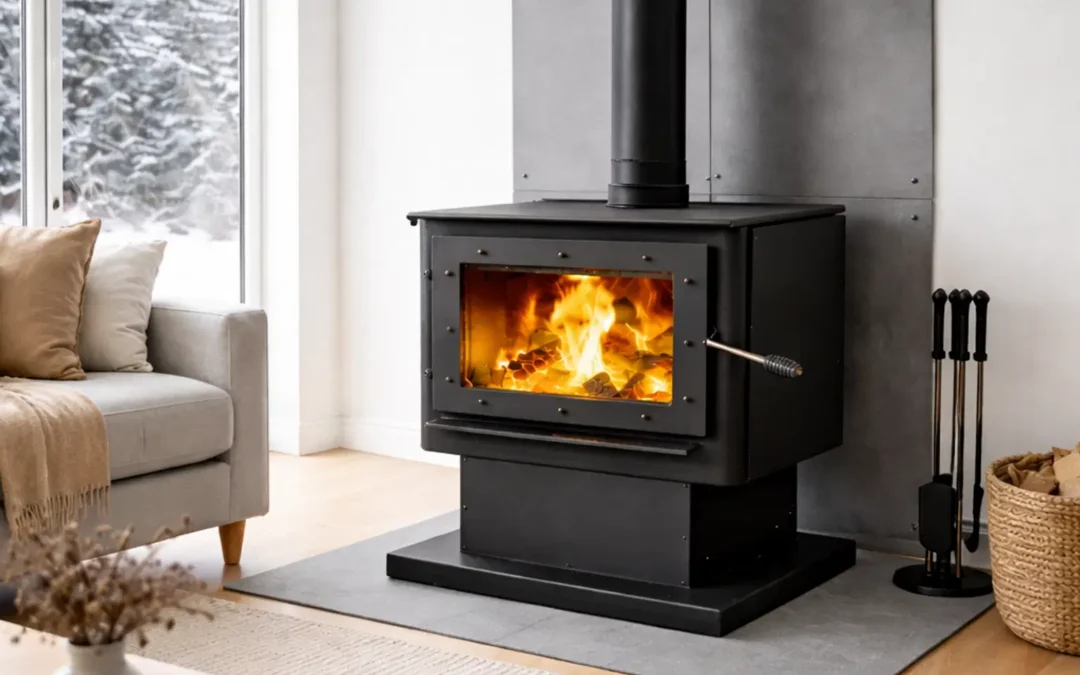
The Chinook Wood Stove combines catalytic and secondary combustion with Flame Innovation’s Just Right Burn Technology. Built in Post Falls, Idaho, it uses mechanical airflow controls to respond to changing chimney draft without electronic sensors or powered dampers.
What Just Right Burn Technology Does
Just Right Burn Technology is powered by the patented Variable Choked Venturi, or VCV, system. Its two valves help manage combustion air as draft changes. The operator still selects the heat setting and follows the stove’s starting, reloading and maintenance procedures.
Primary VCV: Low and Medium Burns
The Primary VCV helps regulate air supplied directly to the wood during low and medium operation. As chimney draft increases, it helps limit primary airflow; as draft decreases, it allows additional air. During a full high burn, the manual primary control overrides the Primary VCV.
Secondary VCV: Air Above the Fire
The Secondary VCV adjusts airflow to the five stainless steel secondary burn tubes as chimney draft changes. It operates during low, medium and high burns. The tubes introduce air above the fire to support combustion of wood gases.
Catalytic and Secondary Combustion Work Together
The Chinook also contains a catalytic combustor. Its clean-burn design combines the catalyst, secondary burn tubes, insulated firebox and controlled airflow. The stove’s published EPA-certified particulate emissions rate is 1.29 grams per hour; that is a tested rating, not a promise that fuel and operating conditions have no effect.
For component details and operating procedures, use the Chinook documents on our manuals and reports page.
Construction and Published Performance
The approximately 480-pound Chinook has a brick-lined 2.17-cubic-foot firebox and accepts logs up to 18 inches long. It includes five stainless steel secondary burn tubes, a catalytic combustor and a neo-ceramic viewing window with an air-wash system.
- Published overall efficiency: 79.4% HHV.
- EPA-tested maximum heat output: 36,400 BTU per hour.
- Manufacturer’s heating-area estimate: up to approximately 2,400 square feet under suitable conditions.
Heating coverage depends on insulation, climate, layout, fuel and installation. Match the stove to the building’s heat demand rather than assuming a substantial stove suits every tiny home. Review the current Chinook specifications and the EPA Certified Wood Heater Database when comparing models.
Less Adjustment, with the Operator Still in Control
Just Right Burn Technology can reduce repeated air-control adjustments during low and medium burns. It does not replace correct startup, catalyst-bypass operation, suitable firewood or chimney maintenance. Follow the current manual for each stage of operation and inspect the stove and venting as directed.

Heating Without Electricity
The Chinook’s combustion system and Just Right Burn Technology operate without household electricity. Its optional convection fan uses electricity to circulate room air, but the fan does not control the fire or the VCV valves.
Mechanical controls still need the correct installation and maintenance. They do not make the stove fail-proof or eliminate the possibility of smoke, creosote or overheating. Mobile-home installations must follow the exact requirements in the current owner’s manual.
Made in Post Falls, Idaho
Flame Innovation welds and assembles the Chinook in Post Falls. Its steel body, serviceable combustion components and substantial firebox are intended for home and shop heating.
Compare the Chinook with Your Heating Needs
Visit the Chinook product page for current availability and full specifications. Review the installation and operating documents, then contact Flame Innovation with your building size, insulation and proposed chimney setup.