You finally pulled the trigger on a smokeless fire pit. Smart move. But here is something most people only figure out after their first backyard burn: the fire pit itself is just the starting point.
Maybe you set it down on your wooden deck and immediately wondered if that was a great idea. Maybe you wanted to cook something over the flames but had no good way to do it. Or maybe the rain moved in overnight and you realized you had no cover for your new investment. These are the moments when smokeless fire pit accessories go from “nice to have” to “why didn’t I grab these first?”
This guide is designed to front-load that discovery for you. Before you light your first fire, you deserve to know which accessories genuinely solve problems, which ones are mostly marketing noise, and how the design of a specific pit like the Revolve affects what will actually work with it. By the end, you will have a practical checklist to shop with confidence, not scramble with regret. Let’s dig in.
Why Accessories Matter Before Your First Fire
That gap, the one most owners discover after the first fire, is what this piece is designed to close.
The right accessories can determine whether a fire pit performs the way it was designed to, from the very first burn. What fits your specific model, what works with its airflow design, and what solves real problems versus what just looks good in a product photo are all questions worth answering before you spend anything.
The Revolve smokeless fire pits from Flame Innovation are built with practical outdoor use in mind, and knowing which accessories complement that design upfront is part of getting the most from them.
This piece also draws a clear line between accessories that earn their place and add-ons that rarely do. Most sources skip that distinction entirely. This one won’t.
A Cooking Grate Turns a Fire Pit into an Outdoor Kitchen
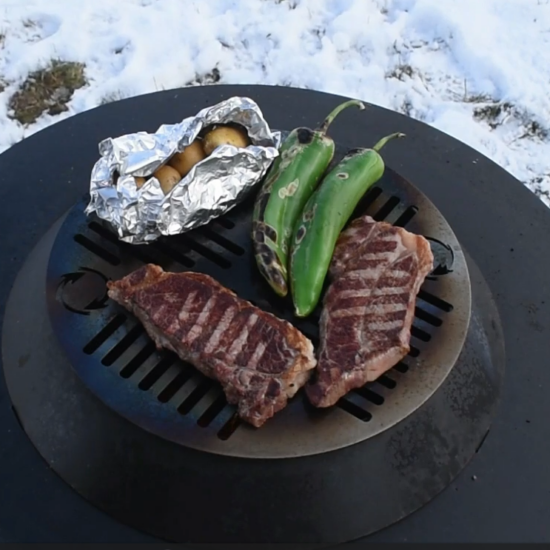
The cooking grate is the single accessory that changes what a smokeless fire pit actually is. Without one, you have a great heat source and a genuinely beautiful backyard centerpiece. With one, you have a place to grill burgers, roast vegetables, or set a cast iron skillet directly over the fire.
Material is the first decision. Look for a grate built from 304 stainless steel, which holds up to the heat and moisture cycles that outdoor cooking creates. It resists corrosion, cleans up reasonably well, and is the recognized material standard for premium fire pit accessories. If you want to understand why material grade matters across the whole fire pit category, this breakdown on what to look for in a stainless steel fire pit covers the full picture.
Fit is just as important as material. A cooking grate needs to rest securely above the secondary combustion zone, not down inside the bowl where it can block the airflow that keeps smoke output low. A grate that sits too low can interfere with the airflow the pit relies on, confirm resting height with Flame Innovation before buying.
For Revolve owners specifically, confirm the grate diameter and resting height against the Revolve’s rim dimensions before purchasing. A generic grate sized for a different fire pit may not seat correctly.
For anyone who takes their fire pit to a campsite or cabin as well as using it at home, a cooking grate earns its place in every single setting.
A Base Stand Protects Your Deck and Expands Where You Can Burn
A base stand changes the fire pit’s height, but it does not automatically make a wood deck, composite patio or other combustible surface suitable. Follow the fire pit and accessory instructions for approved surfaces, clearances and any required protection.
Fire pits can radiate heat toward the surface beneath them. Do not assume that lifting the pit with a stand provides sufficient heat protection. Confirm the permitted installation with the manufacturer and review the U.S. Fire Administration’s outdoor fire safety guidance before choosing a location.
The comfort benefit is easy to overlook until you’ve sat around a pit that’s too low. A stand brings the fire up to a height that works naturally for people sitting in chairs, which makes a real difference during longer gatherings.
When shopping for a stand, prioritize two things: weight capacity and material. A fully loaded fire pit with wood inside can be heavier than it looks, so confirm the stand is rated for that load. Stainless steel or powder-coated steel construction holds up best against the moisture and heat cycles that outdoor use creates.
Some smokeless fire pit designs benefit from clearance underneath the unit; check your model’s instructions for any manufacturer guidance on surface placement.
If you have a premium patio surface or plan to use your fire pit on more than one surface type, a base stand stops being optional fairly quickly.
A Spark Screen Is a Safety Accessory, Not a Marketing Add-On
Smokeless fire pits reduce smoke significantly, but they do not eliminate sparks. A single ember carried on a breeze can land on dry grass, a wood deck, or a guest’s jacket. A spark screen addresses that risk directly and earns its place on every burn, not just the cautious ones.
A well-fitted screen sits over the rim and intercepts embers before wind carries them. It does not meaningfully reduce heat output or block your view of the fire. The risk reduction matters especially near a fence, a structure, or in dry summer conditions.
Mesh gauge is the detail most buyers overlook. Too-coarse a mesh lets fine sparks through. Too-fine a mesh restricts the secondary combustion airflow that makes a smokeless fire pit perform the way it should. The right mesh strikes a balance between containment and breathability.
Fit precision matters just as much as mesh size. On a large smokeless fire pit, a screen that does not seat securely on the rim will shift during use, leaving gaps where containment matters most. Before buying, confirm the screen diameter against your fire pit’s actual rim measurement.
If you are still weighing fire pit options and want to understand how design choices affect accessories like this one, the guide on how to choose a fire pit, including fuel types, designs, and what actually matters is a useful starting point.
A spark screen earns its keep every single time the fire is lit.
A Rain Cover Extends the Life of Your Investment
Once the fire is out, the exposure begins. Rain, morning dew, wind-blown debris, and sitting ash all work on your fire pit between uses, and a spark screen won’t help with any of that.
Even a stainless steel smokeless fire pit carries non-stainless components, fasteners, and interior surfaces that benefit from staying dry. Ash left inside the bowl absorbs moisture, making cleanup harder and potentially affecting interior surfaces over time. A fitted cover solves this before it starts.
Evaluating covers is straightforward. Three variables matter: fit, fabric durability, and how well it fastens in wind. UV-resistant fabric is worth seeking out specifically if your fire pit sits in a sun-exposed backyard; cheaper materials degrade and crack within a season. Secure fastening matters too because a cover that lifts and flaps in the wind traps moisture underneath rather than shedding it.
Debris is the less obvious problem. Debris can accumulate in a pit’s airflow openings when it sits uncovered, a fitted cover keeps the interior and vents clear between uses.
Get a cover sized to the pit’s exact dimensions so it fits properly and sheds water cleanly; a generic cover that bunches or shifts creates the moisture problem you were trying to prevent.
Compared to refinishing or replacing a pit that has weathered poorly after two or three seasons, a quality fitted cover is one of the best-value purchases in this category.
Smokeless Fire Pit Inserts: Genuinely Useful or Mostly Hype?
A smokeless fire pit insert is typically a liner designed to retrofit a standard fire pit with improved airflow, the idea being to reduce smoke output. If you already own a traditional fire pit, that’s a legitimate upgrade worth considering.
If you’re buying a purpose-built smokeless fire pit, an insert is redundant. The combustion system is already baked into the design. You’d be paying to replicate what the fire pit already does.
Compatibility is the real issue with inserts. The airflow separation that makes secondary combustion work depends on a precise fit between the insert and the outer fire pit wall. A poor-fitting insert may not provide consistent airflow separation, so smoke reduction results can vary.
For anyone who wants a genuinely low-smoke fire without the guesswork, a purpose-built stainless steel smokeless fire pit like the Revolve is the cleaner solution. If you’re still weighing your options, our portable fire pit buyer’s guide walks through the practical criteria that actually matter before you buy.
The honest verdict: inserts solve a real problem for traditional fire pit owners. For everyone else, this is one accessory category where the marketing tends to oversell the need. If you’re starting fresh, start with the right design rather than retrofitting your way to it.
Accessories That Sound Useful but Rarely Earn Their Place
Inserts aside, some accessories get even less return for the money. Knowing which ones to skip is just as useful as knowing what to buy.
- Decorative log racks are a good example. They are typically built for rectangular or square fire features and may not suit the round form of a smokeless pit, verify dimensions before buying.
- Branded tool kits (pokers, ash shovels, tong sets) show up in a lot of premium accessory bundles. The tools themselves are fine, but a basic fireplace tool set from any hardware store does the same job for considerably less. You’re paying for matching logos, not better function.
- Colored fire glass and lava rock are designed for gas fire pits. They are not appropriate for wood-burning smokeless pits and can obstruct airflow, check manufacturer guidance before using any fill material.
- Dedicated ash catchers marketed for smokeless pits are largely redundant. For most round smokeless pits, a standard metal ash bucket and scoop are sufficient for cleanup.
The pattern is consistent across all four: each one either duplicates a simpler tool, doesn’t fit the geometry of a round pit, or was designed for a gas feature and repackaged with misleading language. If you’re building out a practical setup for your Revolve, focus your budget on accessories that solve real problems. You can explore the full range of Flame Innovation stoves and fire pits for outdoor living to see what’s worth your attention.
How the Revolve’s Design Shapes Accessory Compatibility
Knowing which accessories to skip is useful. Knowing which ones actually fit your specific fire pit is what makes that knowledge actionable.
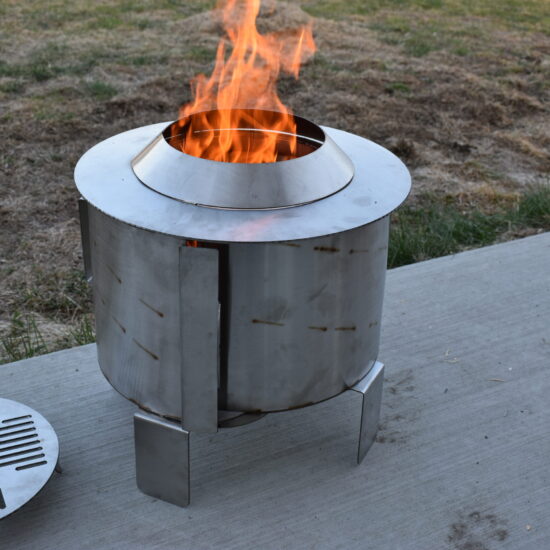
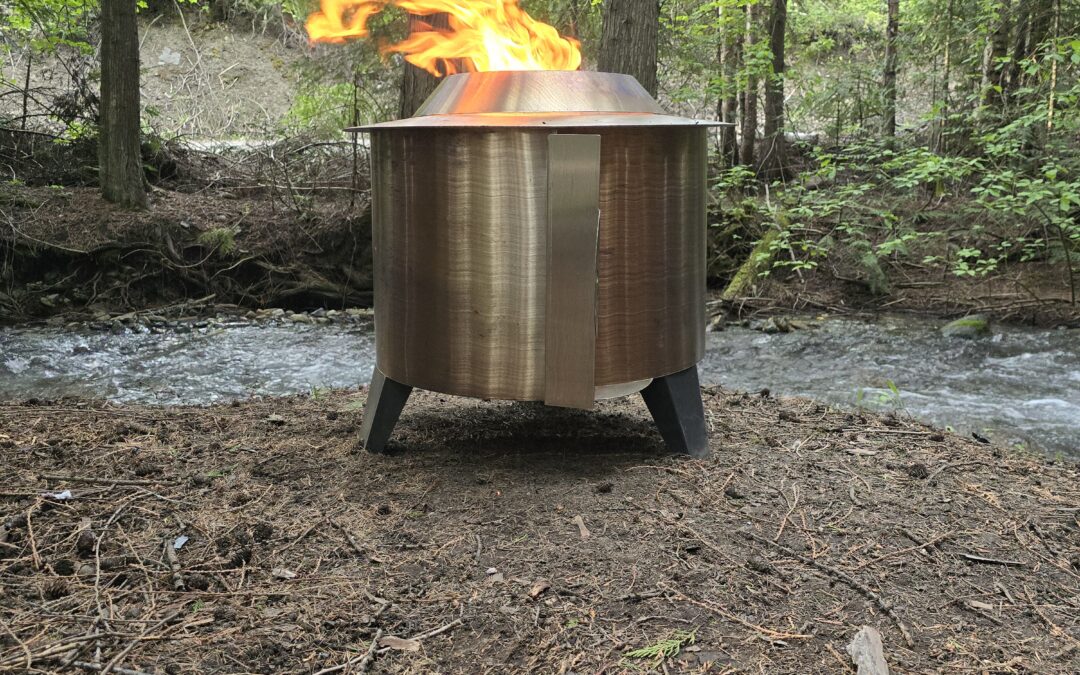
The Revolve smokeless fire pit, designed and built by Flame Innovation in Post Falls, Idaho, has a specific geometry and purpose-built airflow design that directly affects accessory compatibility. That design is what drives smokeless combustion, and it’s also what makes a “universal fit” claim worth scrutinizing.
Rim-mounted accessories require a precise diameter match. Spark screens and cooking grates need to seat securely on the Revolve’s outer rim. An accessory built for a different brand’s dimensions may rock, shift, or sit at the wrong height. An accessory that doesn’t seat correctly may interfere with the airflow that makes the Revolve perform as designed, always confirm fit with Flame Innovation.
Base stands need to be evaluated on two factors: height and weight capacity. A fully loaded Revolve carries real weight, and a stand rated for a lighter pit may not hold up over time. Height also matters for airflow clearance underneath the unit.
Covers should match the Revolve’s exact dimensions. Flame Innovation can point you toward compatible accessories that won’t compromise the pit’s performance or finish.
For buyers weighing the best smokeless fire pit options, accessory compatibility is part of the total-value calculation. A fire pit with a clear accessory ecosystem saves guesswork and cost over the long run.
Your Pre-Purchase Accessory Checklist
Now that you know how the Revolve’s design shapes what accessories will and won’t work, here’s a simple checklist to bring into your purchase decision.
- Cooking grate. Get one if cooking over the fire is part of the plan. Confirm the diameter fits your specific model before buying. Confirm resting height with Flame Innovation.
- Base stand. Confirm that the stand is compatible with your exact model. Use only surfaces and clearances permitted by the fire pit and accessory instructions; a stand alone does not establish that a wood or composite deck is safe.
- Spark screen. Worth having whenever the pit is near structures, dry grass, or people seated close to the fire. Prioritize mesh gauge and a secure rim fit. A screen that shifts or sits loosely won’t contain sparks where it matters.
- Rain cover. Buy it at the same time as the fire pit. Wet ash, trapped moisture, and debris in the airflow openings are all problems a fitted cover prevents. Waiting until after the first wet season means the damage is already done.
- Insert. If you own a traditional fire pit you want to upgrade, research insert compatibility carefully. Skip it if buying a purpose-built smokeless pit.
Before you buy any accessory for the Revolve, contact Flame Innovation directly. Our team can confirm fit, compatibility, and material specs so every accessory works with the Revolve from the first fire forward, not against it.
Conclusion
The right accessories do not just add convenience; they determine whether your fire pit performs the way it was designed to. Each of the four core accessories earns its place when chosen with the pit’s design in mind.
What does not earn its place is buying accessories blindly, assuming universal fit, or treating compatibility as an afterthought. The Revolve is a precision-engineered system, and the accessories around it should reflect that standard.
For Revolve owners, review the Revolve 22 / 27 Grill and contact Flame Innovation to confirm fit before buying. Check the instructions for your exact fire pit and accessory rather than assuming a universal fit or surface approval.