A small wood stove for an RV, camper or tiny home has to suit both the heating need and the complete installation. Body size and a headline BTU number are not enough to make that decision. The useful comparison starts with the exact model, intended application, clearances, chimney layout and installed load.
This guide explains how to turn a specification sheet into questions for the manufacturer and installer. It is a planning framework; the model’s instructions and the requirements for your particular structure determine the installation.
1. Identify the structure and the model
Tell the manufacturer whether the stove is intended for a cabin, a tiny home on a foundation, a movable tiny home, an RV or a temporary camp. Those descriptions are not interchangeable. Include how the structure will be occupied and whether it will travel.
Find the exact model and revision on the label and in its manual. A brochure’s reference to a safety standard is not, by itself, proof that the product is approved for every mobile application. Confirm the intended use with the manufacturer and the authority responsible for the installation, and ask your insurer about its own requirements.
A safety listing and EPA emissions certification address different matters. Check the documentation relevant to the decision instead of treating a generic “certified” label as a complete answer.
2. Turn the clearance diagram into a floor plan
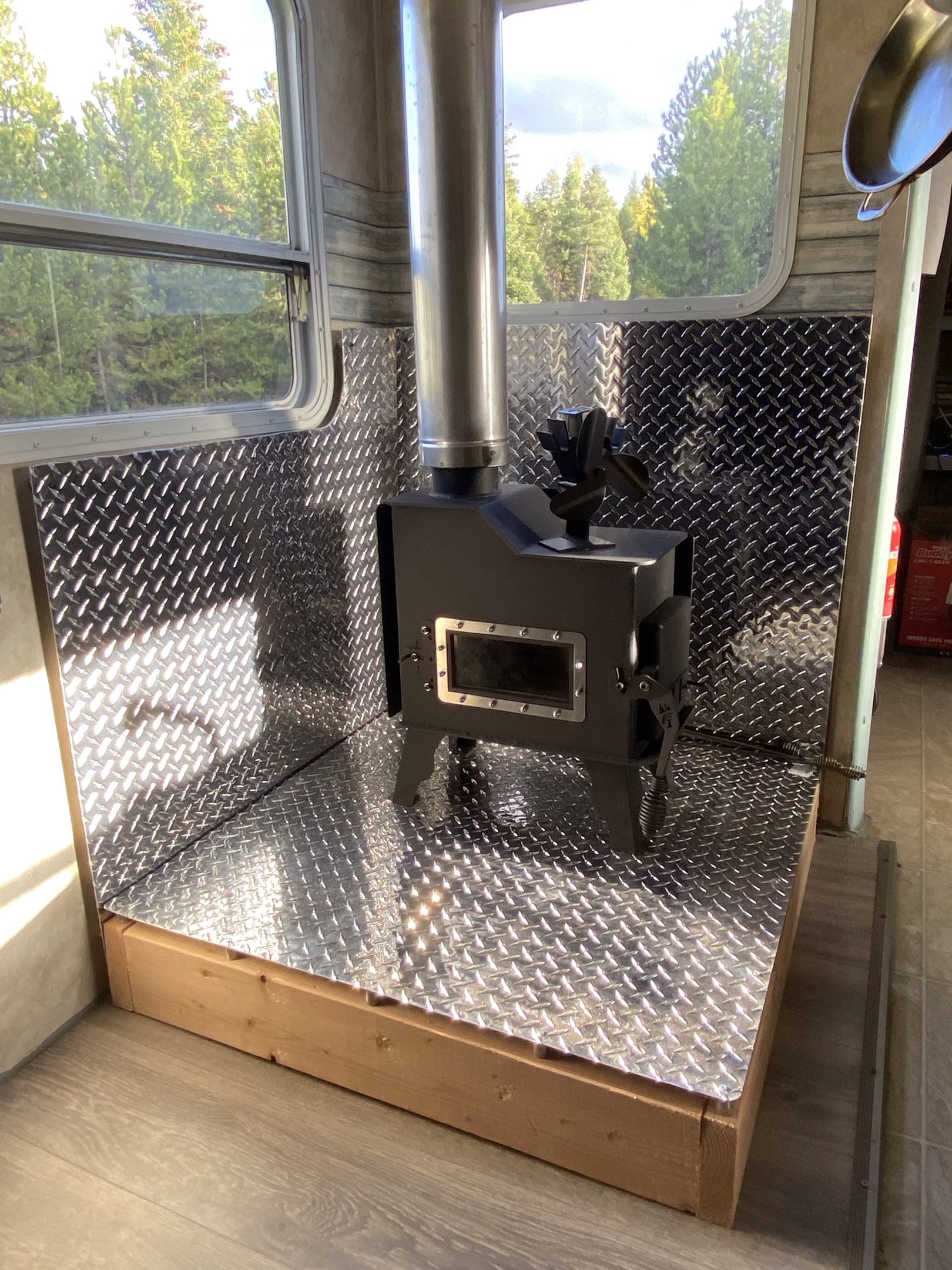
Use the manual’s actual diagram for the proposed configuration. Record the required distances and floor protection, noting what each measurement is taken from. Include nearby cabinetry, fabrics and combustible material within the wall assembly, not just the visible finish.
Different installation arrangements may have different requirements. When a reduced clearance is allowed, identify the exact shield, air space and construction it depends on. Do not apply a generic percentage reduction or transfer one stove’s clearance to another.
Draw the stove, required protection and access area to scale. Leave room for loading, opening the door, reaching the controls and carrying out maintenance. For a broader building plan, see our tiny-home installation planning guide.
3. Map the chimney from the stove to the termination
Record the required diameter, permitted connector and chimney system, necessary supports and protection at any penetration. Include height, offsets and the terminal location in the plan. An appliance outlet position does not automatically mean that every top-exit stove must use a roof route or that every rear-exit stove must pass through a wall.
Check the route against the vehicle or building: windows, roof equipment, awnings, structural members and moving parts may limit the design. A component that appears to fit physically is not necessarily suitable for the temperature, clearance or support requirements.
Use the stove and chimney manufacturer’s instructions together. For the Mini Me non-electric pellet stove, follow its specified 4-inch chimney arrangement rather than assuming ordinary pellet vent is appropriate. Get current model guidance on height and insulation before choosing components.
4. Calculate installed load rather than shipping weight
Separate the stove’s installed weight from its packaged shipping weight. Add the hearth, shielding, chimney, supports and any permanently fitted accessories. Ask a qualified person to assess the supporting floor and mounting arrangement.
For a vehicle or trailer, include the installation in the relevant vehicle and axle load calculations and assess how it will be secured during travel. For a fixed building, the floor and concentrated load still matter. Weight is not irrelevant simply because the home is stationary.
5. Match the heating range and fuel to your use
Estimate heat loss using the climate, insulation, window area and layout. Compare the stove’s useful operating range with that need. Heating suitability and installation feasibility both matter; neither should be treated as an optional final check.
Ask what a published BTU figure represents: a tested range, a maximum claim or another measurement. Do not assume every rating is a peak measured with the same wood and air setting. The conditions and method matter when comparing products.
Consider the actual fuel you can buy, store and use. Cordwood has size and moisture requirements. Pellets vary in quality and must meet the appliance’s specifications. Do not assume fuel can be collected at a campsite or that every pellet brand performs identically.
6. Check power, operation and maintenance
Many pellet appliances use electricity for feeding or fans; the current Mini Me pellet stove uses a non-electric gravity-feed design. Power independence still requires a suitable chimney and ongoing care. By contrast, the original Optimum energy log stove uses electrical components even though its logs feed by gravity.
Read the lighting, shutdown and cleaning procedures before buying. Include access to the ash area, air passages, gaskets and chimney in the layout. The U.S. Fire Administration’s heating-safety guidance is a useful general resource alongside the exact model’s manual.
A comparison sheet you can bring to an installer
| Item to record | Question to resolve |
|---|---|
| Model and intended use | Does its documentation cover the structure and installation you propose? |
| Clearances and hearth | Which diagram and protective assembly apply? |
| Chimney route | Can the complete system meet diameter, height, support and clearance requirements? |
| Installed load | Can the structure support and secure the complete installation? |
| Heat and fuel | Does the operating range suit the heat demand and available permitted fuel? |
| Care and documentation | Can you access the components and maintain the appliance as instructed? |
Apply the checklist to the model you are considering
Start with the Caboose Tiny Wood Stove for its current product information, or compare the Mini Me pellet model if pellet fuel and non-electric operation fit your needs. Do not select a camp stove solely because its dimensions or weight are convenient for a permanent living space.
Download the relevant Flame Innovation manual and reports. Then send our team the model, intended use, measurements and proposed chimney layout so we can help locate the right product information before you order.