When winter temperatures drop and heating bills climb, choosing the right system for your home becomes one of the most important decisions you can make. With so many options on the market, from electric furnaces to pellet stoves to radiant floor systems, it can feel overwhelming to determine which solution truly delivers the best combination of efficiency, cost, and comfort.
That is where the Chinook Wood Stove vs. Other Home Heating Options: A Practical Comparison comes in. This guide cuts through the noise and gives you a clear, honest look at how the Chinook wood stove stacks up against today’s most popular heating alternatives. Whether you are evaluating fuel costs, installation requirements, environmental impact, or long-term reliability, you will find straightforward answers here.
By the end of this post, you will understand the real strengths and limitations of the Chinook wood stove alongside competing systems, so you can make a confident, well-informed choice for your specific home and climate. No guesswork, no marketing fluff; just practical insights designed to help you heat your home smarter this season.
First, Which Chinook Are We Talking About?
Before diving into any comparison, it is worth clarifying exactly which Chinook wood stove this post covers, because the name appears in more than one place across the heating market.
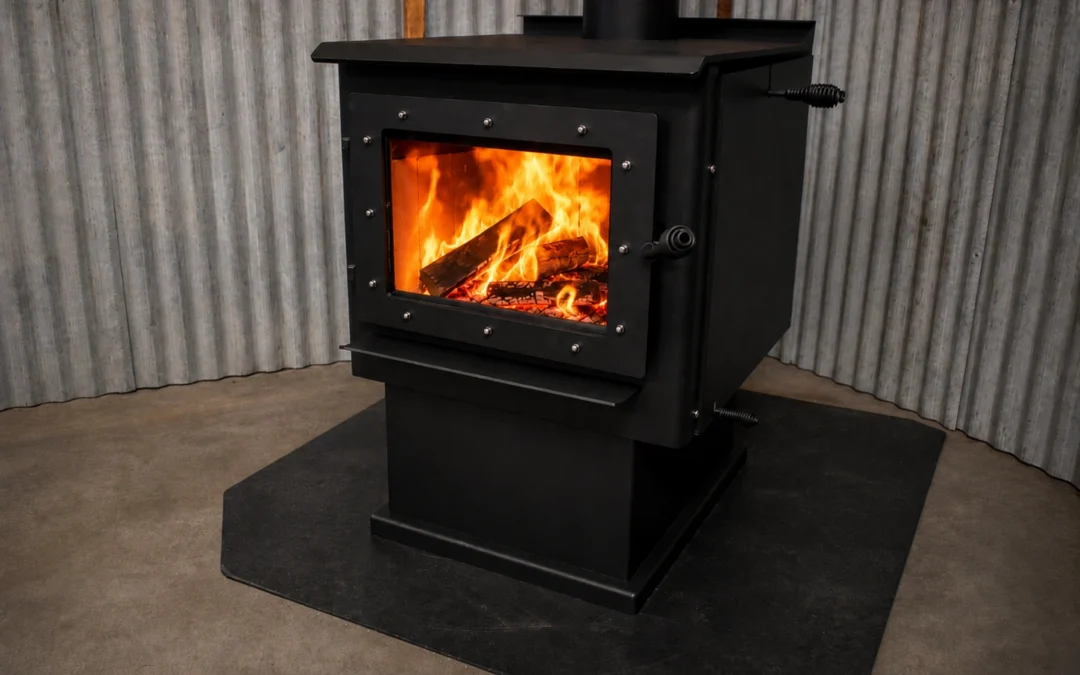
This post is specifically about Flame Innovation’s Chinook Wood Stove, designed and manufactured in Post Falls, Idaho. Flame Innovation is an American company building premium wood stoves, non-electric pellet stoves, and outdoor heating products with a focus on dependable performance and energy independence. Their Chinook is built around patented Just Right Burn Technology, a mechanical airflow regulation system that requires no electricity, no sensors, and no control boards.
Buyers researching this topic may also encounter a separate product called the Blaze King Chinook 20, a catalytic wood stove from an entirely different manufacturer. That product appears in Hearth.com forum discussions and at various hearth retailers, which means search results for “Chinook wood stove” can pull both products into view simultaneously.
The distinction matters in practical terms. The two products use different combustion technologies, carry different specifications, operate under different warranty structures, and serve different design philosophies. Applying one product’s spec sheet to the other’s purchase decision leads to real confusion. Everything in this comparison refers specifically to Flame Innovation’s Chinook. If you want to confirm you are looking at the right product, start at the official Flame Innovation product page before reading further.
How the Chinook Wood Stove Works (and Why the VCV System Matters in a Comparison)
At the center of the Chinook’s design is the patented Variable Choked Venturi (VCV) system, which Flame Innovation markets under the name Just Right Burn Technology. In plain terms, the VCV responds mechanically to changing draft conditions inside the stove, automatically adjusting airflow during low and medium burn settings to keep combustion steady and efficient. There are no electronic sensors reading the fire, no circuit boards making calculations, and no electric motors moving parts. The system uses chimney draft pressure itself as the operating input, a purely mechanical process that requires no power source and no user intervention once a heat setting is selected.
This stands in direct contrast to how conventional wood stoves operate. With a standard damper-controlled stove, the user manually opens and closes the air supply based on feel, visual cues, or experience. That process is inherently imprecise. Open the damper too long and you over-fire the stove, burning through wood faster than intended and pushing unnecessary heat out the flue. Close it too early and the fire smolders, the glass blackens, heat output drops, and you are back at the stove making adjustments. Flame Innovation refers to this cycle as the “Wood Stove Dance,” and it is a real operational burden that most wood stove owners know well. The VCV system is specifically designed to reduce that cycle during the burn settings where most users spend the majority of their heating hours.
The zero-electricity design is not just a technical detail; it is a foundational differentiator in any honest heating comparison. Heat pumps stop working when the grid goes down. Electric furnaces are completely grid-dependent. Most pellet stoves require electricity for augers, ignition systems, and blowers, meaning a power outage shuts them down regardless of how much fuel is on hand. The Chinook operates through a grid outage without backup power, modifications, or workarounds. For rural property owners, off-grid users, and anyone in a region prone to winter outages, that independence has direct, practical value that no utility-dependent system can replicate.
It is also worth understanding the Chinook’s intended scope before comparing it to other options. This stove is built for heating homes and shops, not simply for supplemental warmth in a living room. That broader application range shapes every comparison that follows. For a deeper look at the VCV system in action, the Just Right Burn Technology overview video provides a clear visual explanation of how the mechanical regulation works in practice.
The Heating Options Being Compared
To make a meaningful comparison, it helps to understand what each competing heating option actually offers and where each one falls short.
Electric resistance heating covers baseboard heaters, wall units, and electric furnaces. These systems convert electricity directly to heat at a 1:1 ratio, making them mechanically simple and widely available. That simplicity comes at a cost: electric resistance sits at the top of the per-BTU operating cost hierarchy regardless of region, and with grid demand rising from accelerating EV adoption and broader electrification trends, utility rates show little sign of stabilizing.
Heat pumps move heat rather than generate it, which makes them far more efficient than resistance heating under moderate conditions. New cold-climate models have improved substantially, but they still perform less effectively during prolonged extreme cold snaps, and most HVAC professionals recommend pairing them with a fuel-based backup system. They also require electricity, meaning a grid outage disables them entirely.
Natural gas and propane offer relatively low operating costs where pipeline infrastructure or delivery access exists. The trade-off is supply chain dependency: gas buyers are tied to utility pricing cycles, while propane buyers depend on delivery schedules that can be disrupted by weather or logistics constraints.
Oil heat remains common across the Northeast. Operating costs fluctuate directly with crude oil prices, and supply disruptions represent a real seasonal risk for households without storage alternatives.
Pellet stoves provide thermostat-controlled operation and cleaner combustion than traditional wood stoves. Most models, however, depend on electric augers, fans, and circuit boards, making them non-functional during power outages. Rising pellet prices have also prompted active consumer debate about whether the cost advantage over other options is holding up. For a detailed breakdown of how wood and pellet options compare heading into 2026, this wood vs. pellet stove comparison covers the key trade-offs clearly.
Other wood stoves span an exceptionally wide range. Premium brands vary in combustion efficiency, heat output consistency, and long-term durability. Budget imports may offer lower entry costs but often sacrifice build quality. As Heart Line Stove Shop outlines, modern EPA-certified wood stoves are considerably cleaner and more efficient than older models, but performance differences between manufacturers remain significant. The Chinook sits within this broader wood stove category and is evaluated against all of the above options throughout this comparison.
Head-to-Head Cost Comparison: Upfront, Annual, and Total Ownership
Numbers tell only part of the story when comparing heating systems, but they are the right place to start. The table below draws on U.S. Energy Information Administration benchmark data and Department of Energy cost estimates to frame annual fuel costs for an average U.S. home (approximately 1,500 to 2,000 square feet in a mixed climate).
| Heating System | Est. Annual Fuel Cost | Upfront Cost (Unit + Install) |
|---|---|---|
| Electric Resistance | $1,900 – $2,500 | $500 – $2,500 |
| Heat Pump (Air-Source) | $850 – $1,400 | $4,000 – $10,000 |
| Natural Gas Furnace | $700 – $1,200 | $3,000 – $7,000 |
| Propane | $1,500 – $2,800 | $3,500 – $8,000 |
| Heating Oil | $1,800 – $3,200 | $3,000 – $7,500 |
| Wood Stove (purchased cordwood) | $400 – $1,000 | $2,500 – $7,000 |
Wood stove upfront costs require a specific note. The unit itself often ranges from $800 to $3,000 depending on size and specification. However, chimney installation or an existing flue liner upgrade typically adds $1,000 to $3,500 to the total cost of entry. That front-loaded investment is real, but annual fuel costs low enough to recover it within a few heating seasons.
The Real-World Low End: What Self-Sourced Wood Looks Like
The figures above reflect purchased cordwood. When a homeowner supplies their own timber, the economics shift dramatically. One wood stove user located north of Syracuse, New York, a region with heavy snowfall and sub-zero temperatures, reported spending approximately $250 for an entire winter of heating using self-cut and split firewood. That figure represents a ceiling-case outcome: cold climate, high heating demand, and nearly zero fuel cost because the labor replaced the invoice. Most homeowners purchasing seasoned cordwood commercially will land somewhere between that $250 floor and the $1,000 upper range shown above. The point is that the range itself illustrates real potential, not a marketing claim.
Labor, Convenience, and What the Numbers Do Not Capture
An honest total-cost-of-ownership comparison accounts for what money cannot fully measure: time and effort. Wood heat consistently delivers the lowest annual fuel cost among the options shown, but it asks something in return. Sourcing, splitting, stacking, seasoning, and daily loading are physical commitments. Electric and gas systems eliminate that labor entirely; you pay more per year and touch nothing beyond a thermostat. Neither model is wrong. They reflect different trade-offs, and buyers should weigh both monetary cost and daily effort before committing.
Annual maintenance costs deserve inclusion as well. Chimney sweeping for a wood stove runs roughly $150 to $300 per year and is not optional in a properly maintained system. Heat pumps and gas furnaces require annual service visits in a comparable price range, so this line item does not significantly change the comparison.
Why Region Changes Everything
No single system wins across all geographies. Wood stoves hold a clear cost advantage in timber-rich rural areas where cordwood is inexpensive or self-sourced. In those markets, wood heat is difficult to beat on a pure cost basis. Heat pumps, however, can outperform wood on operating cost in mild climates with low electricity rates. A community cost analysis from British Columbia found that at 12.6 cents per kilowatt-hour, a high-efficiency heat pump delivered more BTUs per dollar than a wood stove burning fir at $355 per cord. Change the electricity rate or the cordwood price, and the rankings shift. Propane and heating oil users in the rural Northeast and Midwest, where both fuels are expensive and timber is accessible, tend to see wood heat as the most straightforward path to meaningful savings across a five- to ten-year ownership window.
Power Outages and Grid Reliability: A Growing Purchase Driver
Grid reliability is no longer a background concern for most homeowners. It has moved to the front of purchase decisions. The broad push toward electrification, including accelerating EV adoption, rapid data center expansion, and whole-home electric conversion programs, is placing compounding load on utility infrastructure that was not designed to absorb it. In online communities, this anxiety is visible and active. The 1.9-million-member Off Grid Living & Survival™ Facebook group regularly surfaces threads on heating alternatives, with a single cabin-heating post generating 156 comments as of March 2025, a clear signal that grid-independent heat is not a fringe topic. It is a mainstream concern. A separate Facebook group post focused specifically on wood stove heating costs generated 507 comments and 160 reactions as of November 2025, reflecting sustained, high-volume consumer engagement with the question of what happens to your heat source when the grid fails.
The answer to that question is uncomfortable for most heating categories. Electric resistance heaters go offline immediately when power is cut. Most heat pumps, including mini-splits, depend on grid electricity to run compressors and controls; without power, they are inoperable. Standard pellet stoves rely on motorized augers and circuit boards to deliver fuel and manage combustion, which means a grid outage silences them regardless of how much fuel is in the hopper. Gas furnaces face the same problem from a different direction: even though they burn a non-electric fuel, their electronic ignition systems and powered blowers require grid electricity to function. Across these categories, the best rural and off-grid heating systems share one structural requirement: they must operate without utility dependency.
The Chinook is built around exactly that requirement. Its VCV system is fully mechanical at every burn setting. There are no motors, no circuit boards, no electronic controls, and no requirement for backup power or modification. When the grid goes down during a winter storm or a prolonged utility failure, the Chinook continues to heat without interruption. That is not a backup mode or a degraded operating state; it is simply how the stove works, all the time.
For rural property owners, homeowners in regions with aging grid infrastructure, and households in areas with severe winter weather patterns, this matters in practical terms. Non-electric heating capacity is a risk management decision, not a premium feature. Efficient wood stove use can reduce household heating bills by 30 to 50 percent compared to conventional systems, and when that system also operates independently of the grid, the value case compounds. The cost savings are real. The resilience is structural. For buyers who understand both dimensions, the Chinook occupies a distinct and defensible position in the comparison.
Chinook vs. Electric Heating: Resistance Heaters and Heat Pumps
Electric resistance heating sits at the expensive end of the spectrum for a clear reason: it converts electricity to heat at a strict 1:1 ratio, generating every BTU from scratch rather than moving thermal energy that already exists. Based on EIA residential energy benchmarks, that inefficiency translates to electric resistance costing roughly two to three times more per BTU than wood heat in most U.S. regions. The equipment itself is cheap, and that low upfront cost is frequently what attracts buyers, but the operating costs compound quickly through every winter season.
Heat pumps work differently and deserve a separate evaluation. Rather than generating heat, they transfer it, which produces the efficiency multiplier known as the coefficient of performance (COP). In moderate climates, COP ratings typically range from 2.0 to 4.0, meaning the system delivers two to four units of heat for every unit of electricity consumed. In regions with mild winters and low electricity rates, the math can actually favor a heat pump over wood heat, sometimes by a meaningful margin. That calculation shifts decisively once temperatures drop into sub-zero territory. Heat pump COP compresses toward 1.0 at extreme cold, and a detailed comparison of modern wood heat versus cold-climate heat pumps confirms that wood heat maintains consistent output and efficiency regardless of outdoor temperature conditions. The Chinook’s VCV system continues regulating airflow and burn quality whether it is 10 degrees outside or negative 20.
The shared vulnerability of both electric options is grid dependency. A heat pump and an electric resistance heater both go dark the moment grid infrastructure fails, which is precisely the scenario most likely to occur during a severe winter storm. For rural buyers, that is not a theoretical risk.
The Chinook is the stronger fit for cold climates, rural settings, and locations where electricity rates are high or trending upward. Heat pumps can be cost-competitive for buyers in mild regions with existing mini-split infrastructure. For buyers pairing a heat pump as the primary system with a wood stove as backup, the Chinook handles that role without compromise. It requires no standby electricity, no circuit boards, and no grid connection. It heats a full home or shop on its own terms.

Chinook vs. Natural Gas and Propane
Natural gas is the most direct convenience competitor to the Chinook, and it earns that status honestly. Where pipeline access exists, natural gas offers consistent thermostat-controlled heat, on-demand ignition, and zero manual fuel handling. There is no wood to split, no moisture content to manage, no fire-starting routine on cold mornings. For homeowners in gas-connected urban and suburban markets, that convenience is genuinely difficult to argue against on a daily-use basis. Operating costs per BTU are also competitive, particularly in regions with established pipeline infrastructure where residential gas rates remain relatively stable.
Propane extends something close to that same convenience to rural properties beyond pipeline reach, which makes it a common choice precisely among the rural buyers most likely to be evaluating the Chinook. The critical disadvantage is cost. On a per-million-BTU basis, propane consistently runs more expensive than cord wood at prevailing prices, often substantially so. Beyond the per-unit cost gap, propane buyers absorb a structural supply-chain dependency: delivery schedules, supplier pricing, and tank monitoring are all variables outside the homeowner’s control. That dependency came into sharp relief during the 2020 to 2022 energy price spike period, when rural propane users faced both sharply higher costs and strained delivery capacity simultaneously. A detailed discussion of the off-grid wood vs. propane trade-off makes clear that households with woodlot access gain a degree of supply security that no delivered fuel can match.
There is also an outage dimension that both natural gas and propane buyers often overlook. Modern forced-air furnaces in both configurations rely on electricity for electronic ignition, blower motors, and programmable thermostats. When the grid goes down, those furnaces go down with it, regardless of how much gas or propane remains in the line or tank. The Chinook, operating entirely without electricity, continues producing heat through any outage scenario.
The honest trade-off is straightforward. Natural gas is the more convenient daily-use system where pipeline access exists, and that advantage is real. In propane-dependent or rural locations, the Chinook competes favorably on annual fuel cost, eliminates delivery dependency, and adds meaningful outage resilience that gas-style systems cannot offer. For the buyer choosing between the two, geography and supply access tend to resolve the comparison more than any single performance specification.
Chinook vs. Oil Heat
Oil heat occupies a specific and shrinking corner of the American home heating market, but it remains dominant in rural New England and the broader Northeast, precisely because pipeline natural gas never reached these areas. That geographic reality creates a direct overlap between the typical oil heat customer and the typical wood stove prospect. If you are a rural Northeast homeowner who relies on delivered heating oil, you are already the buyer profile most likely to be evaluating the Chinook, and the cost case for making that switch is substantial.
The central problem with heating oil is not that it is inherently inefficient. It is that the price is entirely outside your control. Heating oil is indexed to crude oil markets, which means geopolitical events, refinery disruptions, and commodity speculation can swing your annual fuel bill dramatically without any change in how much heat your home actually needs. During the 2021-2022 heating season, #2 heating oil prices in New England surged past $5.50 per gallon in many areas, pushing seasonal costs for a typical household burning 1,000 gallons well above $5,000. Real-world cost analysis from New England homeowners documents the gap directly: at $4.09 per gallon with an 80% efficient boiler, oil delivers heat at roughly $36.95 per million BTU, compared to self-processed cordwood at approximately $8.75 per million BTU.
Beyond raw fuel cost, oil heat carries operational vulnerabilities that parallel the gas furnace limitations covered earlier in this post. Oil furnaces depend on electricity to run ignition, thermostat controls, and forced-air distribution, making them just as vulnerable to winter outages as any other grid-dependent system. Add in tank inspection requirements, periodic maintenance or replacement costs, delivery scheduling, and the gamble of price-lock contracts, and the true total cost of oil heat extends well beyond the per-gallon price.
The Chinook addresses each of these weaknesses directly. Firewood prices are set by local loggers and landowners rather than crude oil futures, which insulates buyers from the kind of price shock that hit Northeast oil customers in 2021 and 2022. The Chinook requires no electricity to operate, so a winter storm that cuts power does not cut your heat. Fuel sourcing is a straightforward local transaction, or in many rural situations, something you manage from your own woodlot entirely. For oil heat users who have absorbed one too many volatile pricing seasons, the Chinook’s total cost of ownership argument is not abstract. It is the reason this buyer segment is actively searching for alternatives right now.
Chinook vs. Pellet Stoves (Including the Mini Me)
Pellet stoves earn genuine respect in two areas where they outperform traditional wood stoves: combustion consistency and user convenience. Hopper-fed designs automatically meter fuel into the burn chamber, enabling 8 to 24 hours of continuous heat without manual reloading. Many models also include thermostat-style controls that modulate output based on room temperature, a level of set-and-forget automation that hand-loaded wood stoves simply do not replicate. For buyers who value clean ash and minimal daily intervention, those are real advantages worth taking seriously.
The critical limitation of most conventional pellet stoves, however, is electricity dependency. Electric augers move fuel from the hopper to the burn chamber, fans distribute heat, and circuit boards manage combustion controls. When the grid goes down, the stove goes down with it, the same failure mode that affects electric resistance heaters and heat pumps. For homeowners in rural areas, regions with aging grid infrastructure, or anyone treating their heating system as a backup against outages, that dependency is a meaningful structural vulnerability.
Fuel sourcing is a separate but equally important distinction. Firewood for the Chinook can be self-harvested from owned or permitted land, purchased from local suppliers, or stored in bulk without any specialized processing or refrigeration. Wood pellets are manufactured products, produced from compressed sawdust and wood chips at industrial facilities and distributed through regional supply chains. During periods of high demand or supply disruption, pellet availability can tighten in ways that bulk firewood storage does not.
Flame Innovation’s own Mini Me Non-Electric Pellet Stove addresses the electricity dependency issue head-on. The unit is gravity-fed and runs without fans, motors, circuit boards, or household power. It is EPA-certified and UL-listed, delivers 12,567 to 29,388 BTUs, and can run 8 to 16 hours on a single 40-pound hopper load. It shares the Chinook’s off-grid capability while offering the cleaner combustion profile that pellet fuel provides.
The buyer decision breaks down clearly across three profiles. If cleaner ash, longer unattended burn times, and thermostat-style automation are the priorities and reliable grid power is consistently available, a conventional pellet stove is a reasonable fit. If fuel independence, outage resilience, or access to self-harvested firewood are the driving factors, the Chinook is the stronger match. The Mini Me serves a third profile: buyers who want pellet-style convenience and cleaner combustion without any dependency on household electricity.
Chinook vs. Other Wood Stoves: Where It Stands in the Category
The premium wood stove category is genuinely competitive, and informed buyers shopping this segment will encounter serious alternatives. Brands like Vermont Castings, Pacific Energy, and Quadra-Fire are well-regarded names sold through established dealer and showroom networks. They compete on cast iron craftsmanship, EPA certification, brand heritage, and polished aesthetics. For many residential buyers, these are legitimate considerations and deserve that respect. The question is not whether those brands are credible; it is whether any of them offer what the Chinook delivers functionally.
One point worth clearing up before the comparison goes further: buyers searching “Chinook wood stove” may encounter Hearth.com forum threads referencing the Buck Stoves BK Chinook 20, a product compared against the Pacific Energy Neo in community discussions. That is a completely separate product from a separate manufacturer and has no connection to Flame Innovation or this stove. The name overlap is a genuine source of confusion in organic search results, and the distinction matters when you are evaluating features.
On functional differentiation, the Chinook’s patented VCV system stands apart from what premium residential brands currently offer. Vermont Castings, Pacific Energy, and Quadra-Fire use conventional air-control designs. None of them offer a patented mechanical combustion regulation system that actively manages airflow during low and medium burn settings. This is not a marketing claim layered over similar technology; it is a structural combustion management difference with real consequences for fuel efficiency and burn quality during the settings where most people actually run their stove day to day.
American manufacturing in Post Falls, Idaho adds another dimension that resonates with a specific type of buyer, specifically the rural homeowner, the shop owner, or the trade professional who plans to run a stove hard for fifteen to twenty years and needs parts and serviceability to remain accessible over that horizon. Supply chain transparency is not a checkbox for this buyer; it is a purchasing criterion.
The shop and outbuilding use case also sets the Chinook apart from competitors in a practical way. Premium residential brands position their products almost exclusively for home use. The Chinook is explicitly designed and marketed for heating shops as well as homes, addressing a dual-use need that most of the category does not actively serve.
Heating Shops and Outbuildings: A Use Case Most Competitors Ignore
Most wood stove comparison content treats the question of heating as a purely residential problem. The discussions center on living rooms, open-plan cabins, and bedroom loft temperatures. What almost none of that content addresses is the working outbuilding: the two-car garage converted to a woodworking shop, the detached barn used for equipment maintenance, the mechanic’s workspace at the edge of a rural property. These are real, common heating challenges, and the product guidance available to buyers facing them is genuinely thin.
Shop heating operates on a different logic than home heating. A residential system needs to maintain comfortable temperatures across an entire day with minimal user input. A shop stove needs to do something harder in some respects: bring a large, poorly insulated space with high ceilings and frequent door openings up to working temperature quickly, often from a dead-cold start at 5 below zero. The BTU demand is intense and front-loaded rather than sustained and steady. Forced-air gas systems can meet that brief, but they require gas infrastructure. Electric heat is cost-prohibitive in uninsulated spaces. Neither option helps the buyer whose detached shop sits beyond the reach of affordable electrical service.
Wood stoves fit this use case well for three practical reasons. First, they deliver high-output heat on demand without requiring any electrical hookup, which matters significantly in outbuildings where running power is expensive to install. Second, they use the same fuel source as a home stove, which simplifies procurement and storage for rural property owners already cutting or buying firewood. Third, the operating cost profile for intermittent, high-intensity shop use is favorable compared to systems optimized for continuous residential loads.
The Chinook is one of the few stoves explicitly manufacturer-positioned for both homes and shops, with a rated output of up to 80,000 BTU per hour and coverage up to approximately 2,400 square feet. For farmers, woodworkers, tradespeople, and mechanics evaluating how to heat a working outbuilding, that specification and that positioning matter. Buyers who need to heat both a home and a shop gain additional value from a single product decision that addresses both contexts rather than sourcing two separate heating solutions for two different use cases.
What the Chinook Is the Right Fit For (and When Something Else May Serve You Better)
The Chinook performs at its highest value for a specific buyer profile, and being direct about that profile matters more than overselling the stove to the wrong household.
The strongest-fit buyers share a few common characteristics. Rural and off-grid homeowners who prioritize heating independence over convenience are the clearest match. So are buyers in cold northern climates where heat pump efficiency degrades significantly when temperatures fall well below freezing. Shop owners and tradespeople heating garages, agricultural buildings, and working outbuildings represent another core fit, particularly because the Chinook’s all-mechanical VCV system operates without circuit boards or electrical connections that would be vulnerable to dust, vibration, and power fluctuations common in those environments. Cost-focused buyers with access to locally sourced or self-harvested firewood round out the primary group. For those buyers, annual heating costs can reach levels that no other system approaches. Finally, any buyer who wants a non-electric heating solution specifically as a grid-outage hedge will find the Chinook’s fully mechanical operation to be a genuine structural advantage rather than a marketing point.
The Chinook also serves a strong secondary audience. Households running natural gas or propane as their primary heat source often have an unacknowledged vulnerability: modern gas furnaces rely on electronic ignition and control boards, which fail during power outages. Adding a Chinook as a supplemental or emergency backup eliminates that gap without requiring any grid connection to function.
Honest acknowledgment of poor fits matters here. In mild climates with reliable grid access and low electricity rates, a heat pump delivers both heating and cooling from a single system with minimal manual involvement, which is the right trade-off for that situation. Urban and suburban buyers with existing piped natural gas infrastructure and no meaningful outage concerns will find gas more operationally simple. Buyers who prioritize programmable thermostat control and automated fuel delivery may find a pellet stove better aligned with their daily routine, provided they are comfortable with electricity dependency and managing pellet supply.
One sizing note deserves direct attention. Buyers heating spaces under approximately 600 square feet should evaluate the Caboose Tiny Wood Stove or the Steelhead Small Wood Stove from Flame Innovation’s lineup before purchasing a Chinook. Both are purpose-built for compact applications. Running an oversized stove in a small space forces chronic low-burn operation, which accelerates creosote buildup and reduces efficiency over time. The right stove for the space is always the better investment, even when that means a smaller unit from the same manufacturer.
Making the Decision: Key Takeaways
The core trade-off running through this entire comparison comes down to one sentence: the Chinook delivers the lowest long-term operating cost and complete energy independence, in exchange for more hands-on fuel management and a higher upfront installation investment than some alternatives. That exchange is the right one for a specific, well-defined buyer, and the previous sections have shown clearly who that buyer is.
Two differentiators separate the Chinook from the broader wood stove category. The patented VCV system, marketed as Just Right Burn Technology, provides mechanical combustion regulation at low and medium burn settings without motors, circuit boards, or electricity. The stove also operates with zero grid dependency, meaning it delivers full heat output during outages, storms, and infrastructure failures that render electric, gas-ignition, and pellet systems inoperable.
One final clarification worth repeating: this is Flame Innovation’s Chinook, designed and built in Post Falls, Idaho. It is not the Buck Stoves BK Chinook 20. If you have been researching that product, the specs, pricing, and design are unrelated.
For full specifications, dealer locations, or questions about whether the Chinook fits your specific home or shop application, visit the Chinook product page or contact Flame Innovation directly.
Conclusion
Choosing the right heating system comes down to your priorities, your home, and your lifestyle. The Chinook wood stove consistently delivers on fuel efficiency, long-term cost savings, and reliable warmth that many modern systems simply cannot match. While electric furnaces and pellet stoves have their place, few options combine affordability, sustainability, and genuine heating power the way a quality wood stove does.
Here are the key takeaways to carry forward:
- Wood heat offers independence from utility price spikes
- The Chinook performs competitively across cost, comfort, and environmental impact
- Installation and maintenance are straightforward with proper planning
Now it is time to act. Review your home’s heating needs, compare your local fuel costs, and consider whether the Chinook wood stove belongs in your winter plans. A warmer, more efficient home is closer than you think.